Source Flange Connection Hot Water Meter for Industrial, Energy, and Commercial Use
Find 30 flange connection hot water meter options from verified Chinese manufacturers. Compare models like ACE-LDG and WM1000 with varying accuracy, pressure ratings, and certifications to suit industrial production and energy metering needs; compare the available evidence and request quotations based on your requirements.
Key considerations
Products List




Comprehensive Sourcing Guide
Flange Connection Hot Water Meter Sourcing Guide
Procuring a flange connection hot water meter for industrial or utility applications requires balancing mechanical robustness, measurement accuracy, and documentation quality. These meters are typically installed in closed pipeline systems serving industrial production facilities, where hot water at elevated temperatures flows through nominal diameters that demand bolted flange joints rather than threaded connections. Because installation involves pipeline downtime and flange alignment work, buyers should treat meter selection as a long-term infrastructure decision rather than a simple consumable purchase.
This guide walks through the full sourcing cycle: interpreting product listings, verifying technical specifications, checking compliance documentation, understanding cost drivers, qualifying suppliers, and planning for long-term ownership. The guidance draws on observed listing attributes from current marketplace data, including models such as the WM1000 flange connection pointer water meter and electromagnetic flow meter families, while flagging the points where buyers must confirm details directly with suppliers rather than relying on catalog claims.
Product Scope and Observed Listing Signals
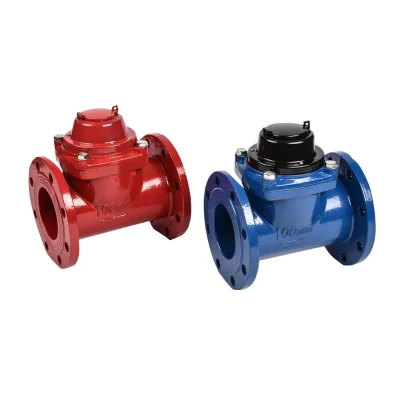
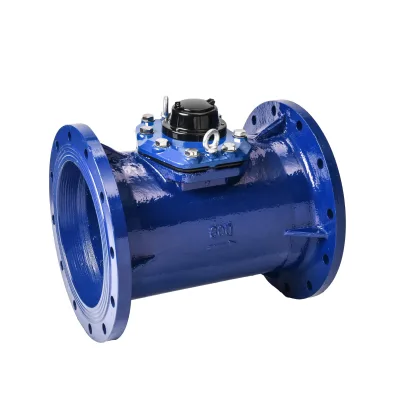
Marketplace listings under this category span several distinct product families. Traditional mechanical hot water meters with flange connections—such as the WM1000 model with observed attributes including a 165mm outside diameter, 200mm length, 185mm width, and 125mm bolt circle diameter—sit alongside electromagnetic flow meters (ACE-LDG type) using tube or flange sensors for liquid measurement, vortex flow meters (ACE-LUGB type), and thermodynamic meters (ACE-TM type) oriented toward natural gas energy metering. Understanding these distinctions prevents buyers from comparing incompatible technologies when filtering results.
Observed listing signals offer useful but incomplete guidance. Listings commonly cite closed pipeline measurement objects, industrial applications, horizontal installation, digital counters, and dry-type work environments, with sizes ranging from DN50 to DN600 and observed prices from roughly 5 to 5000 USD and MOQs from 1 to 500 units. Buyers should treat these attributes as observations from individual listings rather than universal product guarantees—each listing may represent a different configuration, and attributes must be confirmed for the specific quotation under review.
Technical Specifications to Verify
Start with the hydraulic and dimensional parameters that determine fit and performance. For mechanical meters, verify the nominal diameter against your pipeline, the flange dimensions (outside diameter, bolt circle, and length) against mating pipework, and the rated pressure—observed listings cite 1.0MPa—against system conditions. Water temperature tolerance matters greatly for hot water service; observed listings cite 0–90°C, but confirm the specific model's rating, since mechanical meter internals degrade differently at sustained high temperatures. Also check the metrological ratios, with observed listings citing Q3/Q1 of 50 and Q2/Q1 of 6.3, which indicate the measurement range over which accuracy holds.
For electronic meter types, focus on the measurement principle and accuracy class. Electromagnetic models list accuracy of ±0.2–0.5% and electrical measurement principles, while vortex and thermodynamic types operate on different physics suited to their media. Confirm the measuring media (liquid versus gas) matches your application—mixing up families leads to costly specification errors. Ingress protection is another key check: observed listings cite IP65 through IP68 ratings, and the appropriate level depends on whether the meter body, chamber, or counter will face moisture exposure in your installation environment.
Compliance and Safety Documentation
Certification claims appear prominently in listings, with observed attributes citing ISO, CE, UL, GB, ANSI, DIN, and JIS. However, a listed certification keyword is not proof of conformity for the specific unit quoted. Request the actual certificates with scope statements, certificate numbers, and issuing bodies, and confirm the certificate covers the meter family, diameter range, and temperature class you intend to purchase. For hot water meters, metrological pattern approval in the destination market is often a legal prerequisite for billing applications, so identify which approval scheme applies before ordering.
Beyond certificates, ask for the declared conformity basis of each unit: which standard editions the design is tested against, what the production standard is (some listings state it "depends on flow meter size"), and which test reports are available on request. Documentation quality is itself a signal of supplier maturity—a manufacturer that can promptly provide dimensional drawings, material certificates, calibration records, and installation manuals is more likely to maintain consistent production than one that offers only catalog pages. Retain all documentation in your procurement file to support incoming inspection and future audits.
Cost Drivers and Commercial Terms
Price variation across observed listings—from roughly 5 to 5000 USD—reflects fundamental technology and diameter differences rather than simple markup. Mechanical flange meters at small diameters occupy the low end, while large-diameter electromagnetic meters command the high end due to sensor materials, electronics, and liner construction. Main cost drivers include nominal diameter, body material, liner and electrode selection (for electromagnetic types), display and output options, protection class, and customization. Expect price to scale steeply with diameter, so consolidate diameters where hydraulically acceptable to improve unit economics.
Commercial terms deserve equal attention to unit price. Observed MOQs range from 1 to 500 units; low MOQ listings suit pilot orders and replacement purchases, while project volumes may unlock better pricing but require lot consistency guarantees. Confirm packaging (observed options include paper boxes, cartons, and plywood/pollywood boxes for heavier flanged units), the stated origin (listings cite Zhejiang, China), customization availability, payment terms, warranty scope, and spare parts provisioning. For customized configurations, define acceptance criteria in the purchase contract so that non-conforming delivery has a clear remedy path.
Supplier Qualification and Quality Control
Qualify suppliers on manufacturing capability rather than trading polish. Ask whether the factory produces the meter family in-house or assembles purchased components, request information on calibration benches and pressure test equipment, and ask how each production lot is verified before shipment. For flanged hot water meters specifically, hydrostatic pressure testing and dimensional inspection of flange faces should be routine. A supplier listing brand attributes (observed example: YOUIXIN) should be able to substantiate brand registration and production control behind it.
Implement incoming quality control proportionate to order value. For sample or pilot orders, verify dimensions against drawings, check the counter mechanism and registration readability, and witness or review calibration results. For volume orders, define an AQL-based inspection plan covering appearance, dimensions, marking, packaging, and functional checks, and consider third-party pre-shipment inspection for high-value lots. Require the supplier to serialize units so field failures can be traced to production lots, and agree in advance on the data and samples needed to process a quality claim efficiently.
Long-Term Procurement Checks
Plan for the meter's service life, not just the purchase order. Mechanical hot water meters in continuous industrial service require periodic verification or replacement per local metrology regulations, so confirm the verification interval applicable in your jurisdiction and whether the supplier supports recalibration services. Stock critical spares—counter heads, gaskets, bolts, and for electromagnetic types, liner and electrode components—especially for customized configurations that may not be replaceable with standard parts later. Document the exact model, configuration, and firmware or counter version for every installed unit.
Finally, maintain a supplier relationship that supports the installed base. Agree on lead times for repeat orders and spares, request notification of design or material changes that could affect interchangeability, and periodically review whether newer meter types (such as electromagnetic alternatives) offer better lifecycle economics for your operating conditions. Re-verify certifications at each reorder, since certificates expire and production locations can change. A structured annual review of performance data—failure rates, drift indications, and maintenance costs—turns procurement from a transactional exercise into a managed asset program.
Long-Term Procurement Checks
Revisit your installed-base data annually to refine future purchasing. Track failure modes, measurement drift, and maintenance labor by model and diameter, and use this data to negotiate improvements or justify a technology switch at the next procurement cycle. Keep certificates, drawings, and test reports archived for each lot so that regulatory audits and insurance reviews can be answered without supplier dependence.
Sustainability of supply is the final check. Confirm the supplier's ability to honor long-term spares commitments contractually, watch for changes in origin or production site that could affect compliance, and periodically re-quote the market even when satisfied—an installed base with documented specifications is your strongest negotiating position.
FAQs
What is the accuracy of flange connection hot water meters?
The accuracy of these meters typically ranges from ±0.2% to 0.5%. This precision ensures reliable measurement for closed pipeline applications in industrial production. The electrical principles used in electromagnetic flow meters contribute to this high level of accuracy, making them suitable for demanding environments where precise data is critical for operational efficiency.
Can flange connection hot water meters be customized?
Yes, customization is available for these devices to meet specific project requirements. Buyers can request tailored specifications to ensure the meter fits their existing infrastructure. This flexibility allows for integration into various industrial setups, ensuring that the equipment performs optimally within the unique constraints and operational parameters of different facilities and production lines.
What certifications do these meters hold?
These meters hold several key certifications including ISO, UL, CE, GB, ANSI, DIN, and JIS. These certifications verify that the products meet international quality and safety standards. This compliance is essential for global trade, ensuring that the equipment is approved for use in various regions and adheres to strict regulatory requirements for industrial instrumentation and measurement devices.
What is the typical packaging for these meters?
The typical packaging includes paper boxes and plywood boxes to ensure safe transit. This protective packaging safeguards the sensitive components during shipping and handling. Proper packaging is crucial for maintaining the integrity of the meters, preventing damage from external impacts or environmental factors, and ensuring that the products arrive at the destination in perfect working condition for immediate installation.
Where are these meters manufactured?
These meters are manufactured in China, specifically originating from regions like Zhejiang. This location is known for its robust manufacturing capabilities and supply chain efficiency. The Chinese origin provides access to advanced production technologies and skilled labor, ensuring high-quality output while maintaining competitive pricing structures for international buyers seeking reliable industrial measurement solutions.
What is the pressure rating for these meters?
The pressure rating for these meters is generally 1.0MPa. This rating makes them suitable for general water meter applications in industrial settings. The ability to withstand this pressure ensures reliable performance in closed pipeline systems, allowing for accurate measurement without risk of failure under normal operating conditions, thus providing long-term durability and consistent data accuracy.